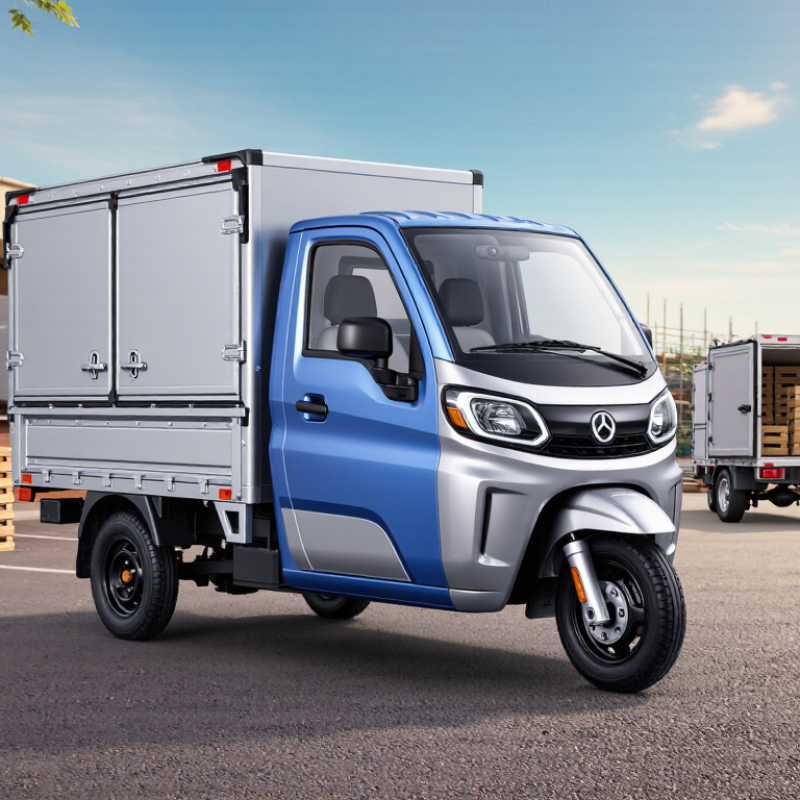
How to Buy an Electric Three Wheeler Cargo in 2026?

Buying an Electric Three Wheeler Cargo in 2026 requires more than checking its price. It means matching the vehicle with real delivery conditions. A bakery route, construction site, and pharmacy network need different specifications. Payload, battery range, charging time, hill performance, and service support matter every day.

The International Energy Agency’s Global EV Outlook 2024 reports that electric vehicle sales exceeded 14 million worldwide in 2023. It also identifies electric three-wheelers as one of the most electrified road-transport segments, especially in China and India. BloombergNEF’s Electric Vehicle Outlook highlights falling battery costs and wider commercial electrification. However, averages can mislead. A vehicle claiming 200 kilometres may travel far less with heavy cargo, steep roads, traffic, or air-conditioning.

Fatih Birol, Executive Director of the IEA, said, “The electric car market is entering a new phase of growth.” His observation also supports commercial three-wheelers, but cargo buyers need a more practical test. Measure your daily route. Weigh the load. Check the charging socket.

Look beyond showroom promises. Ask for certified battery information, warranty exclusions, braking performance, turning radius, and independent service coverage. Examine the cargo box floor and door hinges closely. Small weaknesses become expensive during constant deliveries. The cheapest model may create the highest operating cost. That is easy to overlook.

This guide explains how to compare an Electric Three Wheeler Cargo in 2026. It uses market evidence, operating calculations, and practical inspection points. Some decisions remain uncertain. Real-world testing is still essential.

How to Buy an Electric Three Wheeler Cargo in 2026?

Define Your Cargo Needs and Operating Requirements

Before buying an electric three-wheeler cargo vehicle in 2026, define what it must carry every day. Measure the heaviest load, average load, package dimensions, and loading frequency. A vehicle carrying vegetables needs different protection than one carrying tools or boxed supplies. Record your busiest route, not only your usual route. Include narrow lanes, steep sections, rough surfaces, and frequent stops. Small details matter.

Operating conditions also determine battery and chassis requirements. Estimate daily distance, payload, charging access, and expected driving hours. Cold weather, hills, heavy cargo, and repeated acceleration can reduce the practical range. Published range figures may assume light loads and ideal roads. Treat them as references, not promises. I would test a loaded vehicle on the real route before purchasing. My first estimate has often been too optimistic.

Tips: Keep a seven-day cargo log. Weigh typical loads instead of guessing. Check whether the cargo box protects goods from rain and dust. Confirm turning space at delivery points. Leave reserve battery capacity for traffic delays and weather changes. Ask for service intervals, braking specifications, payload limits, and battery warranty terms in writing. A lower purchase price may become expensive if charging is slow or repairs interrupt daily work. Consider a short pilot period, because actual loading habits can expose problems that a spreadsheet misses.

Compare Electric Three-Wheeler Types and Key Specifications

How to Buy an Electric Three Wheeler Cargo in 2026?

Compare the vehicle type before comparing prices. A box-body three-wheeler protects parcels from rain and dust. A flatbed suits construction materials, produce, and irregular loads. A hydraulic tipper works for sand or waste, but adds weight and maintenance points. IEA’s Global EV Outlook 2024 reported nearly 600,000 electric three-wheeler sales in India during 2023. That growth makes specification discipline more important.

Check payload, not only body size. A useful starting point is 500–1,000 kilograms, depending on local roads and duty cycles. Select a motor with enough gradeability for loaded ramps. Battery capacity should match daily distance, traffic, and payload. A 10–15 kWh pack may fit short urban routes, but cold weather and hills reduce real range. Ask for tested range with a full load. The brochure number is rarely the street number. Also inspect turning radius, ground clearance, regenerative braking, tire size, charging time, and battery warranty. I would not ignore axle load limits; I once saw a spacious cargo bed become a handling problem.

Tips: Measure your narrowest delivery lane first. Request a payload test. Compare energy use per 100 kilometers, not just battery price. Keep 15% range reserve for traffic, slopes, and battery aging. Confirm spare-parts access and technician response times in writing. A cheaper vehicle can become expensive when downtime reaches two working days.

How to Buy an Electric Three-Wheeler Cargo in 2026?

Compare common electric three-wheeler cargo body types by representative payload capacity and driving range. Actual specifications vary with battery size, road conditions, load, and local regulations.

Flatbed Cargo

Suitable for construction materials, agricultural goods, and irregularly shaped loads. Prioritize payload, deck dimensions, and side-rail strength.

Enclosed Box Cargo

A practical choice for parcels and urban delivery. Check usable internal volume, door width, weather sealing, and charging access.

Dump Cargo

Designed for sand, soil, waste, and other bulk materials. Hydraulic lift capacity, chassis durability, and grade performance are key specifications.

Refrigerated Cargo

Used for food and temperature-sensitive deliveries. Evaluate insulation, temperature range, cooling power, and the effect of refrigeration on range.

Indicative comparison ranges for 2026 purchasing research. Payload is shown in kilograms and estimated loaded range in kilometres. Verify the certified figures, battery warranty, charging time, and road-legal limits before purchase.

Evaluate Battery Range, Charging, Payload, and Motor Performance

How to Buy an Electric Three Wheeler Cargo in 2026?

Battery range should match your actual route, not the number printed in a brochure. A useful test includes the driver, regular cargo, traffic, hills, and frequent stops. During a delivery trial, I would record battery percentage after every ten miles. Cold weather, heavy loads, and steep roads can reduce range sharply. Keep a practical reserve of at least 20 percent. That cushion matters.

Payload ratings need careful reading. Some figures include the driver, while others describe cargo only. Confirm both values before comparing vehicles. Place a loaded crate over the axle, then check stability during braking and tight turns. A lower center of gravity usually feels safer. Do not guess here. Overloading can increase stopping distance and tire wear. I would also inspect the frame, suspension, and brake response after a rough route, not only during a showroom demonstration.

Charging performance affects daily income. Check whether the charger suits your workplace voltage and available parking time. A full charge overnight may work for one shift, but repeated daytime routes need faster recovery. Ask for charging times at different battery levels, because the final portion often takes longer. Motor performance should be judged under load. Test a hill with cargo, not an empty vehicle. Smooth acceleration, controlled torque, and stable speed matter more than an impressive peak-power figure. My own mistake was judging a motor by speed alone; it felt strong empty but struggled on inclines.

How to Buy an Electric Three Wheeler Cargo in 2026? - Evaluate Battery Range, Charging, Payload, and Motor Performance
Evaluation Category Light Urban Cargo Medium-Duty Cargo Heavy-Duty Cargo Recommended Buying Target What to Verify Before Purchase
Battery and Range
Battery voltage and capacity 60 V / 100 Ah
About 6.0 kWh nominal
72 V / 150 Ah
About 10.8 kWh nominal
72 V / 200 Ah
About 14.4 kWh nominal
Choose enough capacity for the planned route plus a 20% reserve. Confirm whether the quoted capacity is nominal or usable energy and request the battery datasheet.
Usable battery energy Approximately 5.4 kWh Approximately 9.7 kWh Approximately 13.0 kWh Use usable energy for range calculations. A typical planning value is 85% to 90% of nominal capacity. Check the battery-management-system limits, low-temperature performance, and minimum state of charge.
Advertised driving range Approximately 80–120 km Approximately 120–180 km Approximately 150–220 km Compare vehicles using the same test method, load, speed, road gradient, and weather conditions. Ask for a range result with a loaded vehicle rather than an unloaded showroom estimate.
Practical loaded range Approximately 60–90 km Approximately 90–140 km Approximately 110–170 km Plan daily operation around the lower half of the practical range when routes include hills, traffic, or frequent stops. Conduct a loaded road test. Payload, tire pressure, temperature, speed, and hills can substantially reduce range.
Energy consumption Approximately 6–10 kWh per 100 km Approximately 8–14 kWh per 100 km Approximately 11–18 kWh per 100 km Use measured loaded consumption to estimate electricity cost and charging requirements. Request test data at the vehicle's normal operating speed and rated payload.
Battery chemistry Lithium iron phosphate batteries are commonly selected for commercial duty because of their thermal stability and long cycle life. Lead-acid batteries generally cost less initially but are heavier and usually provide less usable energy for the same rated capacity. For frequent commercial use, prioritize a battery with a documented cycle-life rating, thermal protection, and replaceable service parts. Check cell manufacturer, warranty conditions, water or dust protection, balancing method, and replacement cost.
Charging and Electrical System
Standard AC charging time Approximately 6–8 hours Approximately 8–12 hours Approximately 10–14 hours Match charging time to the overnight parking period or the longest planned loading break. Charging time depends on battery size, charger output, starting state of charge, and charging cut-off settings.
Typical onboard charger power 1.2–1.8 kW 1.8–3.0 kW 2.5–4.0 kW Confirm that the available electrical supply can safely support the charger continuously. Verify input voltage, plug type, circuit protection, charger efficiency, and whether the charger is onboard or external.
Fast-charging option Limited availability; often not necessary Optional on some configurations Useful for multi-shift operations when supported Consider fast charging only if the vehicle works more than one shift per day and the battery warranty permits it. Check the maximum charging current, connector standard, cooling requirements, and effect on battery warranty.
Charging electricity per full charge Approximately 6.5–7.2 kWh Approximately 11.5–13.0 kWh Approximately 15.0–17.5 kWh Allow for approximately 8% to 15% charging losses when estimating electricity consumption from the grid. Use the local electricity tariff and actual charger efficiency for operating-cost calculations.
Payload, Cargo Space, and Chassis
Rated payload Approximately 300–500 kg Approximately 600–1,000 kg Approximately 1,000–1,500 kg Choose a rated payload at least 15% to 20% above the normal cargo weight, including the driver and accessories. Confirm the legally permitted gross vehicle weight, axle loads, and whether the payload rating includes the battery.
Cargo-bed configuration Flatbed, box, or small tipper Flatbed, enclosed box, refrigerated box, or tipper Large box, flatbed, or hydraulic tipper Select the body type according to cargo volume, weather protection, loading height, and unloading method. Measure internal length, width, height, wheel-arch intrusion, tailgate opening, and floor load rating.
Typical cargo-bed floor height Approximately 650–800 mm Approximately 700–900 mm Approximately 750–1,000 mm A lower floor improves manual loading efficiency, while a higher chassis may provide better ground clearance. Check the loading height with the suspension at normal operating load, not only when unladen.
Ground clearance Approximately 140–180 mm Approximately 160–220 mm Approximately 180–250 mm For uneven roads, prioritize adequate clearance without raising the cargo bed excessively. Measure clearance at the lowest battery, axle, and differential points under normal load.
Motor and Driving Performance
Continuous motor power Approximately 3–5 kW Approximately 5–8 kW Approximately 8–12 kW Use continuous power for sustained hills and long operating periods; do not compare vehicles using peak power alone. Request the continuous-power rating, motor efficiency map, controller rating, and thermal-protection details.
Peak motor power Approximately 6–8 kW Approximately 10–15 kW Approximately 15–20 kW Peak power should support starting with a rated load without excessive speed loss or overheating. Check the duration of peak output and whether the controller limits power when the battery state of charge is low.
Typical maximum speed Approximately 35–50 km/h Approximately 45–65 km/h Approximately 50–75 km/h Select a speed appropriate for local commercial-vehicle regulations and the route's traffic conditions. Confirm the legal speed category, registration requirements, and whether speed changes when fully loaded.
Practical grade capability Approximately 10–15% loaded grade Approximately 12–18% loaded grade Approximately 15–20% loaded grade For hilly routes, prioritize torque, low-speed control, and cooling rather than maximum speed. Test the vehicle on the steepest route with the intended payload and verify the grade definition used by the seller.
Regenerative braking Usually available Usually available Usually available Regeneration can reduce brake wear and recover energy during deceleration, but it does not replace friction brakes. Check adjustable regeneration levels, low-traction behavior, brake-light activation, and battery acceptance at high charge levels.
Safety, Durability, and Ownership
Braking system Hydraulic or mechanical drum brakes; disc brakes may be available Hydraulic drum or disc brakes with parking brake Hydraulic disc or heavy-duty drum brakes with independent parking brake Choose a system that can stop the fully loaded vehicle repeatedly without fade. Verify braking performance, brake-load rating, emergency stopping distance, and replacement-part availability.
Suspension requirement Leaf spring or coil spring suitable for light loads Heavy-duty leaf spring or reinforced independent suspension Heavy-duty leaf spring with load-rated axles Suspension should be matched to payload instead of being selected only for a soft unloaded ride. Inspect spring rating, shock absorbers, axle capacity, tire load index, and suspension travel under load.
Tire load capacity Must exceed the loaded axle requirement Must exceed the loaded axle requirement with reserve Must meet the gross vehicle and individual axle ratings Use tires with a load index suitable for the maximum permitted axle load and operating speed. Check tire size, load index, speed rating, recommended pressure, and availability in the operating area.
Battery warranty benchmark A commercial-use battery warranty commonly specifies a time limit, mileage or cycle limit, and a minimum remaining capacity, often around 70% to 80% during the covered period. Prefer a clearly stated capacity-retention threshold and a warranty that covers commercial operation. Read exclusions for fast charging, deep discharge, water damage, unauthorized repairs, and extreme temperatures.
Water and dust protection Battery, motor, controller, and charging connections should have documented ingress protection appropriate for outdoor commercial use. Prioritize sealed high-voltage connections and a battery enclosure designed for rain, road spray, and dust. Request the applicable IP rating and confirm whether the rating applies to the complete assembly or only individual components.
Best-fit operating pattern Short urban deliveries, campus transport, markets, and low-volume distribution Daily route delivery, local logistics, agricultural transport, and service operations Construction support, municipal work, industrial sites, and high-volume commercial delivery Choose the smallest vehicle that meets the route, payload, and grade requirements to reduce purchase and energy costs. Compare total cost of ownership, service network, spare parts, downtime support, registration, and battery replacement cost.
Purchase Decision Rule
Recommended selection formula Select a vehicle only after confirming: practical loaded range is at least 20% greater than the longest daily route; rated payload exceeds normal cargo weight by 15% to 20%; continuous motor power handles the steepest loaded grade; charging fits the available parking period; and the battery, brakes, tires, axles, and chassis are all rated for the intended gross vehicle weight.

Check Safety Features, Regulations, Warranty, and Service Support

How to Buy an Electric Three Wheeler Cargo in 2026?

A safe electric Cargo Three Wheeler should have strong brakes, bright lights, mirrors, and reliable seat belts. Check whether the cargo box stays stable during sharp turns and sudden stops. Ask for a real test ride, not only a showroom demonstration. I would carry a measured load and drive over a rough surface. Small rattles can reveal loose panels or weak mounting points. They matter.

Regulations differ by country, state, and city. Confirm the vehicle’s approved speed, weight limit, registration process, lighting requirements, and permitted road use. Ask the seller for official compliance documents. Never rely on a verbal promise. A local transport office or qualified inspector can provide more reliable guidance. I once underestimated paperwork time, and that mistake delayed a delivery plan.

Warranty terms deserve careful reading. Check coverage for the battery, motor, controller, charger, frame, and braking system. Confirm the warranty period, mileage limit, exclusions, and repair location. Battery replacement costs can change the vehicle’s ownership value greatly. Service support should include trained technicians, available parts, diagnostic equipment, and clear response times. Ask how long common parts usually take to arrive. Get every answer in writing. A low purchase price is less attractive when the vehicle sits unused for weeks. Reliability is not just a specification. It is what happens after the first fault.

Calculate Total Cost and Complete the Purchase Process

Buying an electric three-wheeler cargo vehicle in 2026 requires more than checking the advertised price. Estimate the full cost over three years. Include the vehicle, battery, charger, registration, insurance, delivery, maintenance, electricity, and possible financing fees. Compare the rated payload with your real cargo weight. A vehicle carrying 800 kilograms may perform differently on steep roads or rough surfaces. Ask for written battery warranty terms and service response times. These details often affect daily costs more than expected.


Tips: Request a formal quotation with every fee listed. Measure your loading area before ordering. Check charging time, plug compatibility, tire prices, and spare-part availability. My first estimate was too optimistic because I ignored downtime and seasonal electricity changes. Build a 10% emergency allowance. It may feel excessive, but repairs rarely arrive on schedule.


The purchase process should remain documented. Confirm the vehicle specification, delivery date, payment schedule, warranty, and return conditions in writing. Inspect the frame, lights, brakes, tires, battery casing, and charger before signing delivery acceptance. Take clear photographs of the vehicle and record the battery reading. A short test drive should include turning, braking, reversing, and carrying a realistic load. Verify that the vehicle meets local road, safety, registration, and insurance requirements. Do not rely only on verbal promises. Keep invoices and service records, even if the paperwork feels inconvenient. A cheaper offer can become expensive when support is unclear.

Top